

Some days ago I posted some cumulative growth charts for OECD countries, like this one:
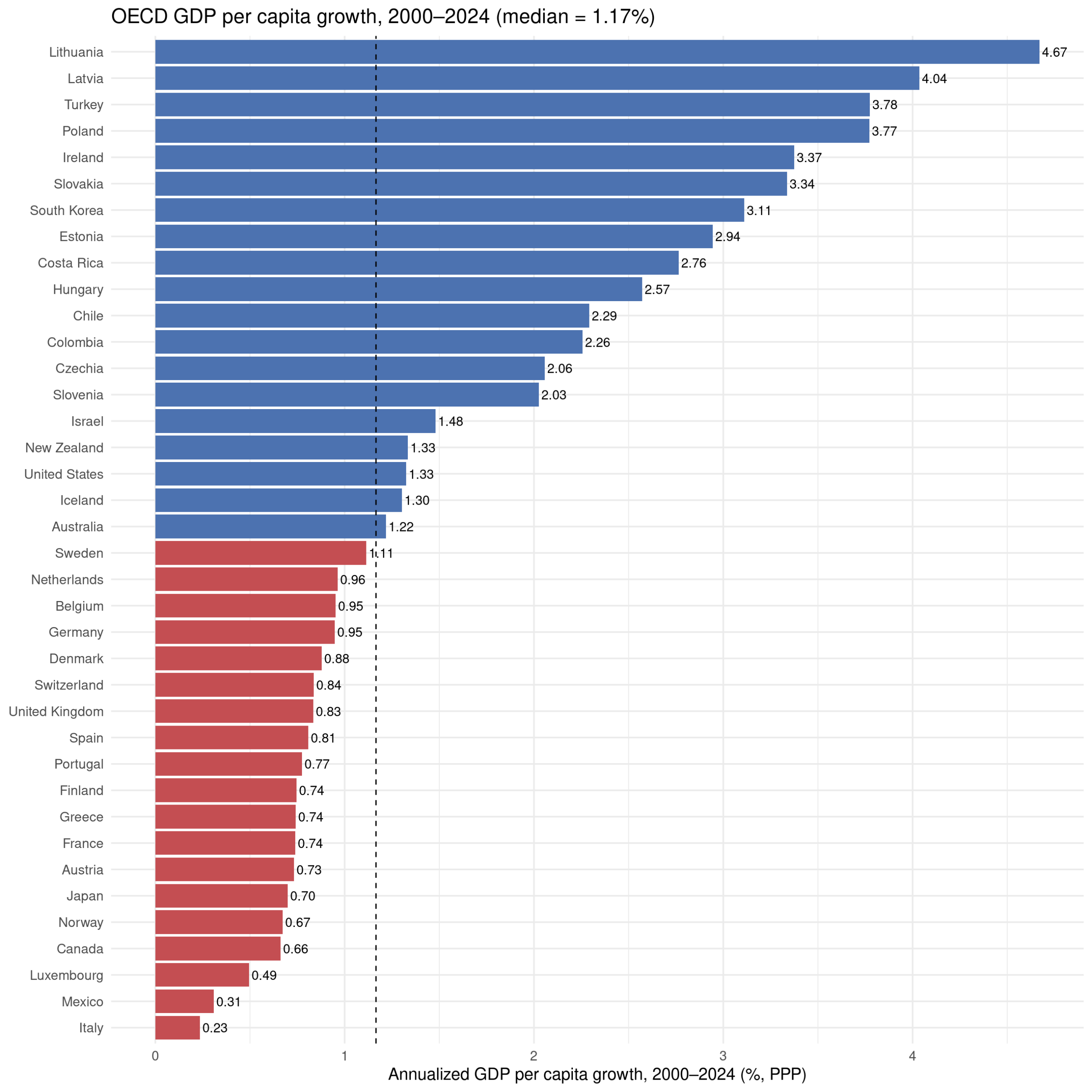
These results are somewhat affected by the usual GDP issues relating to tax haven (Ireland etc.). There are various ways to avoid this, but a simple one is using household consumption data:
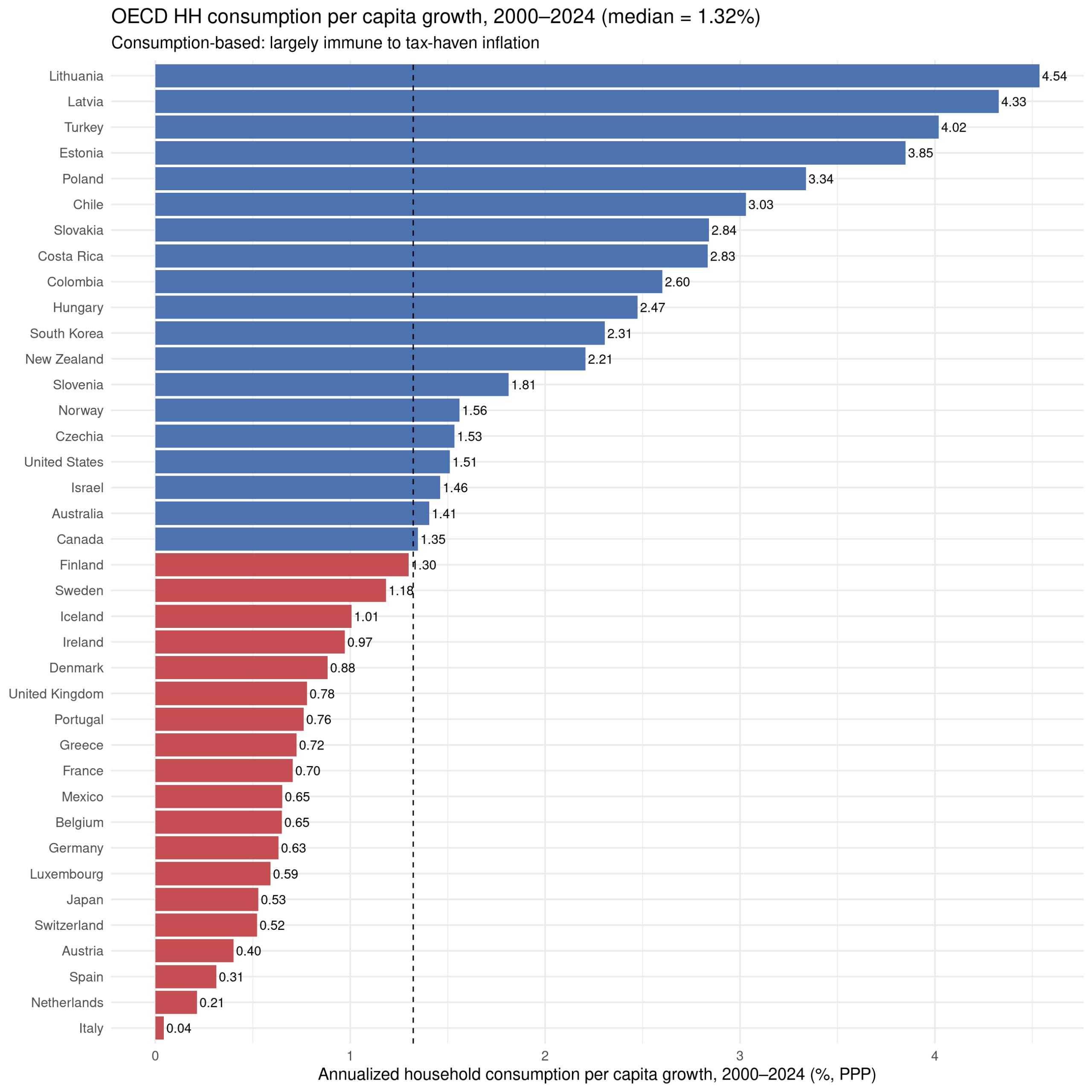
The main change is that Ireland moves down to the other west block countries. Overall, though, it doesn’t matter so much, r = 0.89. From the plot, you can also probably spot that the effect is mainly the poorer countries on the list growing faster:
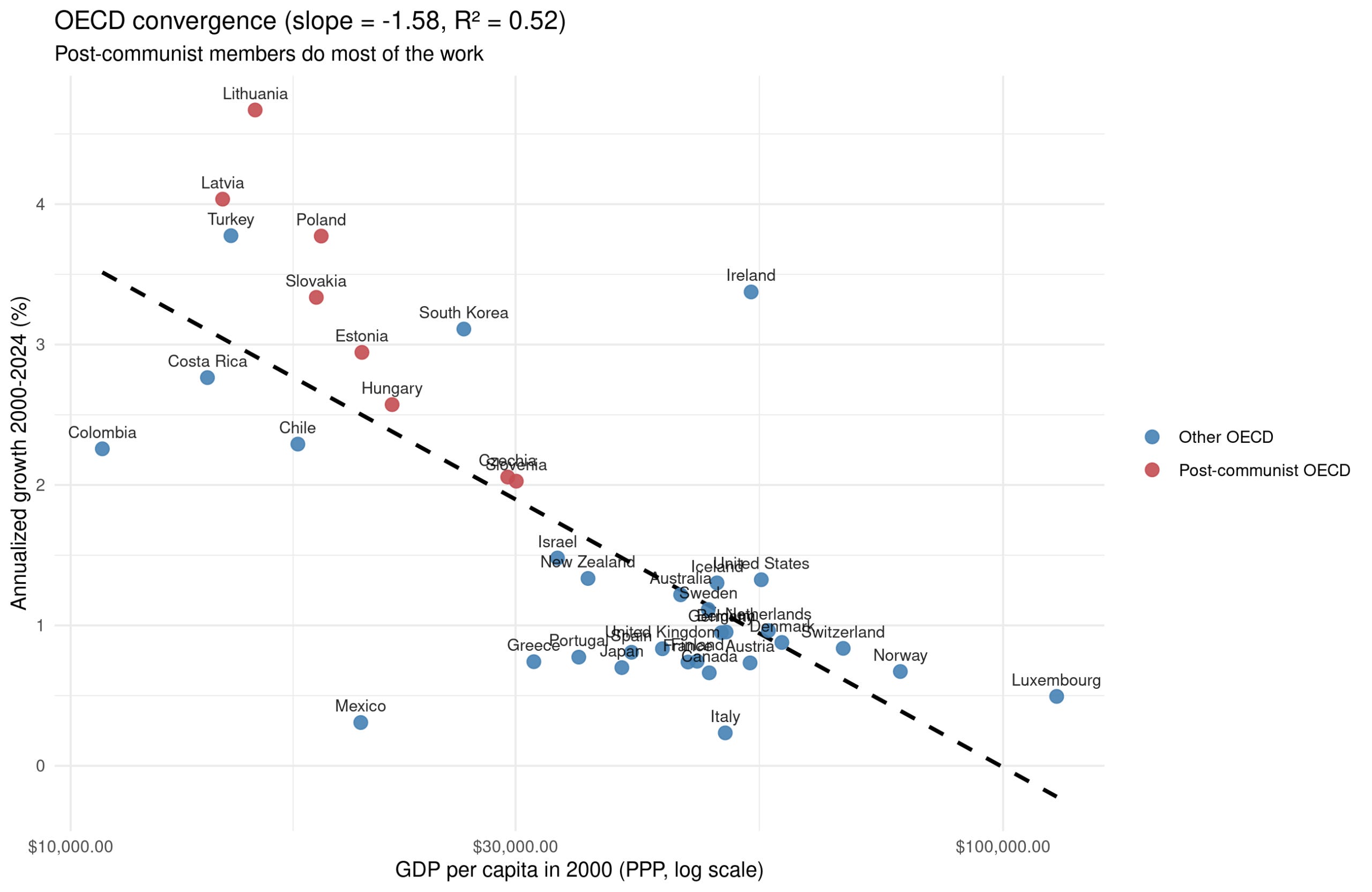
This kind of pattern is usually called the advantage of backwardness. The idea is that if your country is current poor, it is easier to copy working technology and policies from more successful countries, and since copying is easier than inventing, your growth will be faster than theirs, all else equal. We see this clearly in the OECD countries. Many of the countries are dealing with the legacy of communism which retarded their economic growth, so they are catching up to where ‘they should be’ (would otherwise have been).
This story is nice, but it is a gross simplification for the world at large:
You have to pay for baby food if you want to keep reading.