

In August last year, I wrote a post about our then new study about people’s pet preferences and various human differences:
Prior research found that pet preferences and ownership relates to owners’ characteristics, including psychological variation. We aimed to expand this literature. Subjects were OKCupid dating site users who had answered questions for the purpose of improving their matches on the site. We examined the relationship between dog and cat preferences and a broad selection of psychological traits scored using ad hoc scales of questions found in the dataset. Results were in line with prior research. People who prefer dogs were higher in extraversion, conservatism, desired and actual number of children, and mental health, while those preferring cats were higher in intelligence, enjoyed discussions more, and read more books. These associations were robust to controls for age, sex, and location.
The key results are these:
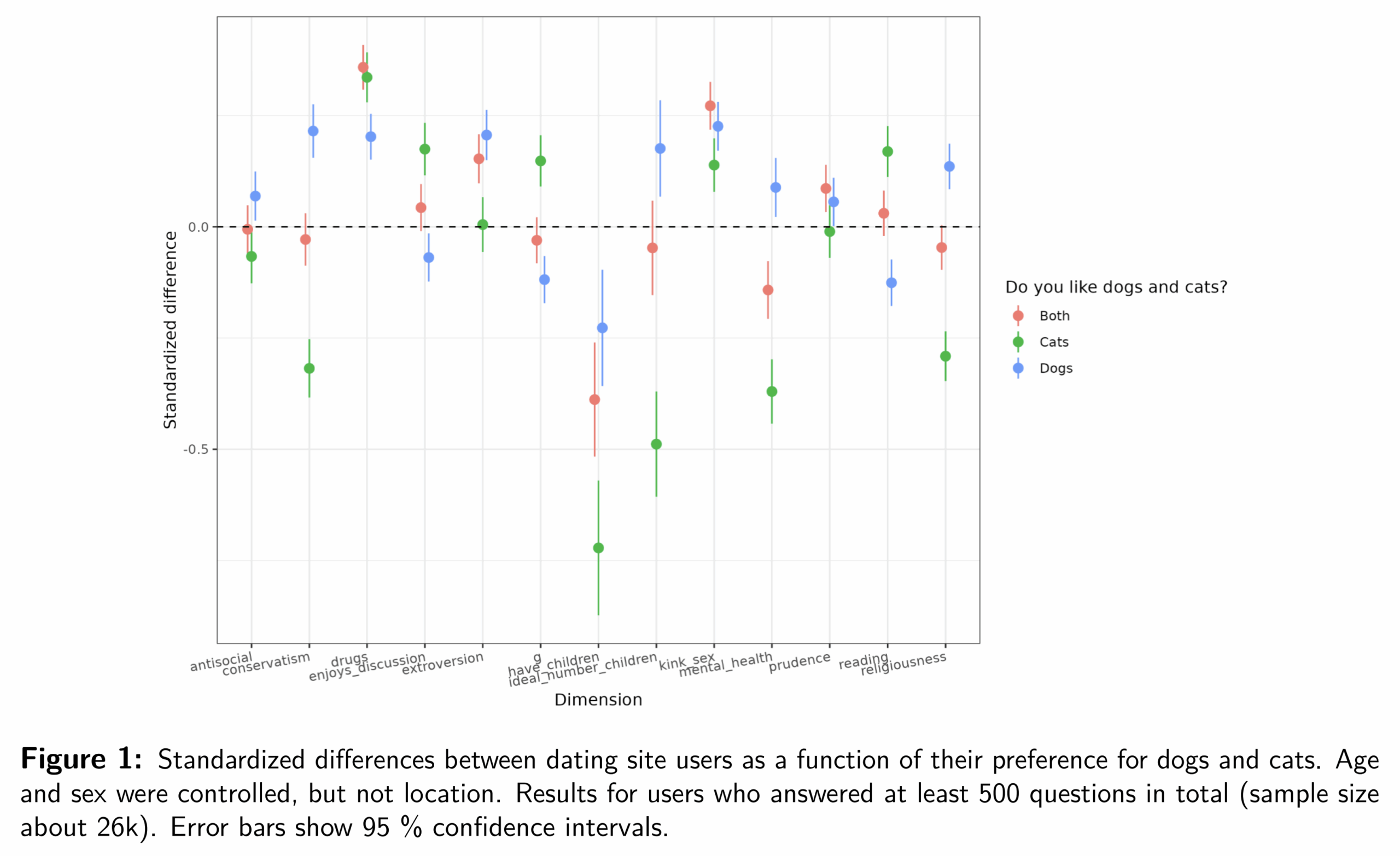
It shows a somewhat paradoxical pair of results: 1) people who say they like dogs or/and cats are less likely to have at least one child (the OKCupid didn’t ask for number of children, just yes/no). However, 2) looking at ideal number of children dog preference is associated with above average fertility preference. I went back to the code and tried also controlling for race, and while there are some differences in apparent fertility rate of OKCupid daters controlling for age and location across races, they are fairly minor in most cases and in the directions you would expect (least likely to have children: East Asians, most likely: Blacks). So maybe dogism is associated with pro-fertility theory but not praxis. Mind you that the subject pool here is quite selected, since it is filtered to 1) people using this nerd dating site, 2) who filled out at least 500 questions, and 3) the questions included these particular ones used for the study.
Why bring this study up again? There was another study in August 2025 about pets and fertility:
Dillion, D., Devine, H., & Gray, K. Pet owners often see dogs as soulmates and value them more than human lives.
Dogs have ascended to core family members in American households. Across three studies, we show that modern dogs now occupy roles historically reserved for close human relationships and often receive greater moral concern than people. Approximately three out of four dog owners view their dogs as primary sources of emotional support and companionship, and this “soulmate” bond is associated with a tendency to prefer and prioritize dogs over people. Childless dog owners are especially likely to view their dog as a soulmate, and national and county-level analyses further reveal that declining birth rates are strongly associated with increased pet-related spending. This suggests that dogs may fulfill caregiving roles once reserved for children and close kin. To assess the implications of this shift, we presented dog owners with moral dilemmas pitting the welfare of dogs against humans. Owners who viewed their dogs as soulmates were more likely to feed, fund, and save the life of a dog over a person. More than half of dog owners chose to save their dog over a human stranger, one in five chose to save an unfamiliar puppy over a person, and one in four chose to give money to a puppy in need over a child in need. The moral elevation of dogs may reflect—and potentially contribute to—declines in human social connection.
They are mainly interested in dogs, though some of their data concerns all pets. The study has a few parts. First, a simple timeline study of birth rate vs. pet spending in USA:
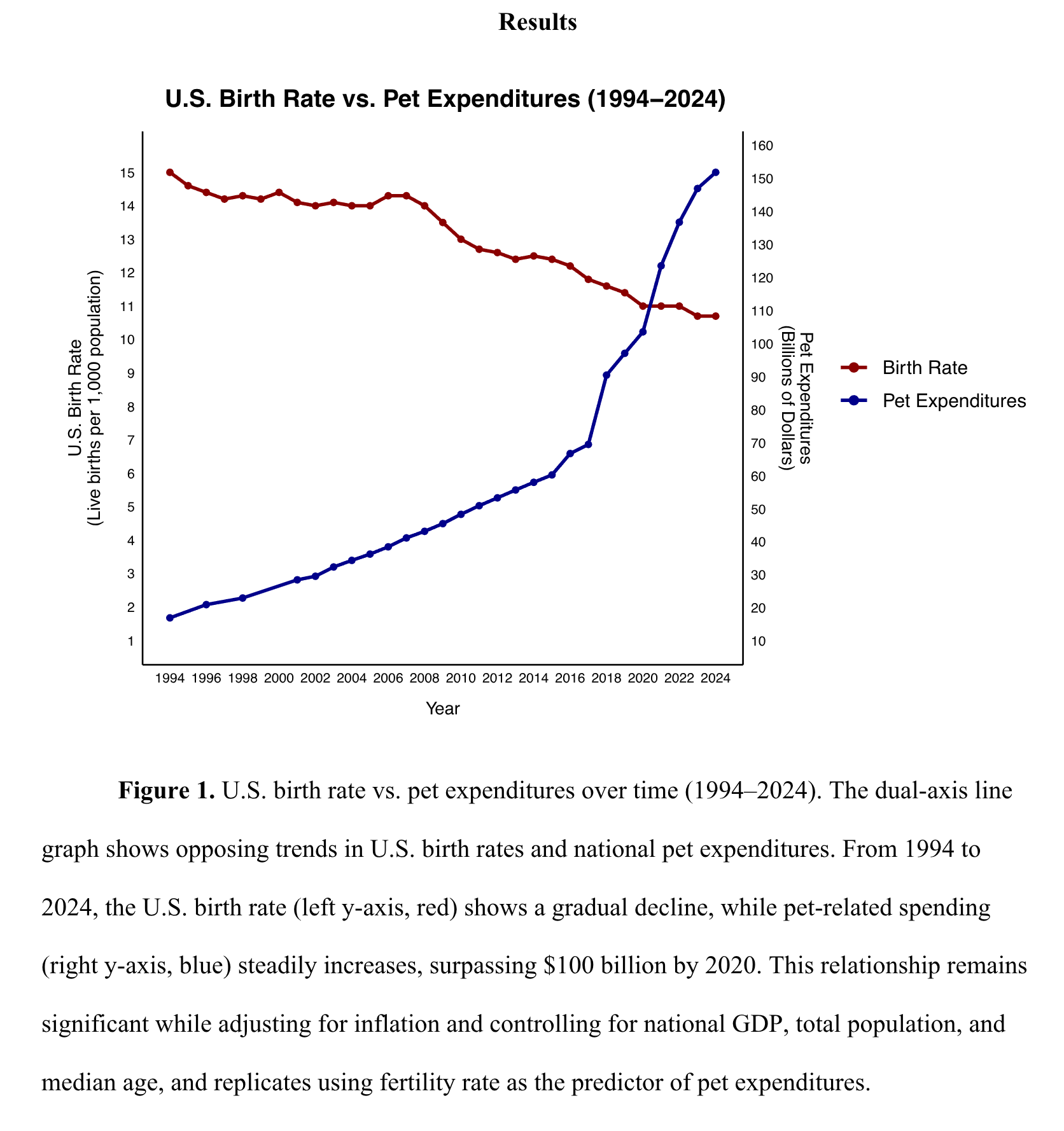
The data don’t exactly scream causality to the eyes, but there’s a negative relationship to be sure, and they say controlling for total population, GDP, and median age does not make it go away (n=30 of course). Pretty sure this would fail any temporal causality test though since the lines don’t really move together. It seems pet spending skyrocketed in 2019 until now, which just aligns with COVID stuff. The birth rate doesn’t show the same pattern, it just slows a linear decline aside from a small bump before the 2007 financial crises (other countries show the same bump).
Second, they use a cross-sectional design using US counties with data on pet expenditures and birth rates (per capita):
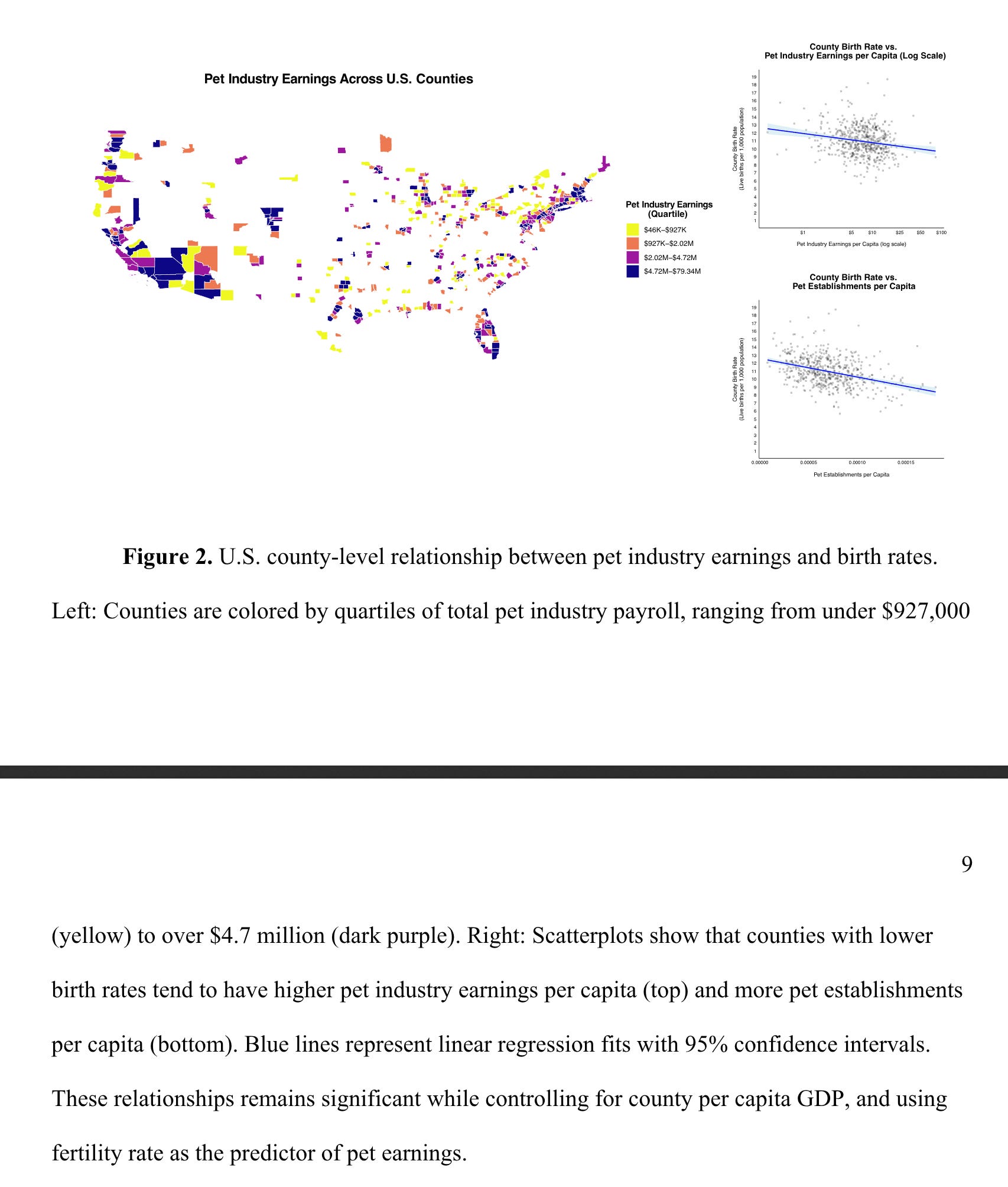
Controlling for “per capita GDP” (I guess some kind of regional domestic product) didn’t make the pattern go away. They didn’t include any table of these county regressions, so I looked at their supplementary files. The data for counties doesn’t even have GDP-like variable, so I don’t know if they even controlled for this as they said. Fertility in the USA is heavily geographically clustered, so without proper controls for spatial autocorrelation and some kind of money metric, this finding is dubious. Their plots just look like a poorer areas have more children. I found some county-level datasets here, and redid their regressions:
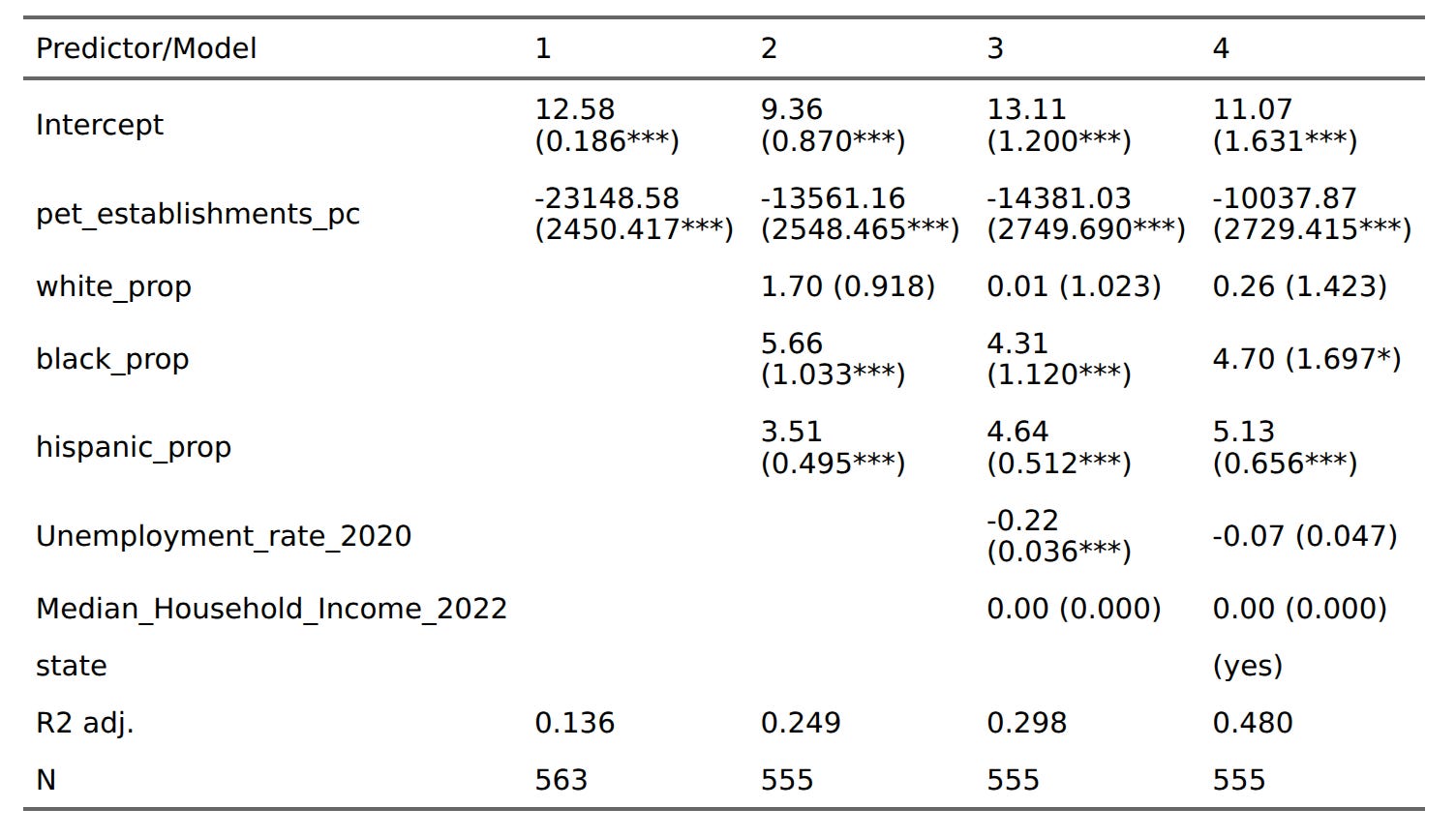
First predictor is number of pet establishments per capita (the one in the plot above, log-transformed version worked slightly worse). Outcome is birth rate (per capita). The value for the coefficient is gibberish, but we can at least compare the relative strength of it across the models and we see that it shrinks by about 40% when we control for race proportions alone, and another 20% when we control for state dummies. The economic variables weren’t important, at least not adjusted for race. Verdict: plausible, but not proven with this kind of crude cross-sectional analysis. It’s hard to do much in terms of spatial modeling because, as their map shows above, the pet data only covers the ~550 most populated counties thus leaving the map with many holes. Given that state was an excellent predictor, it may be sensible to find some more fine-grained data on effective population density or something like that and try this once more (and also because population density, and city or apartment living is a key alleged cause of lower birth rates).
Finally, in the third part, they administered some questionnaires in typical psychologist fashion:
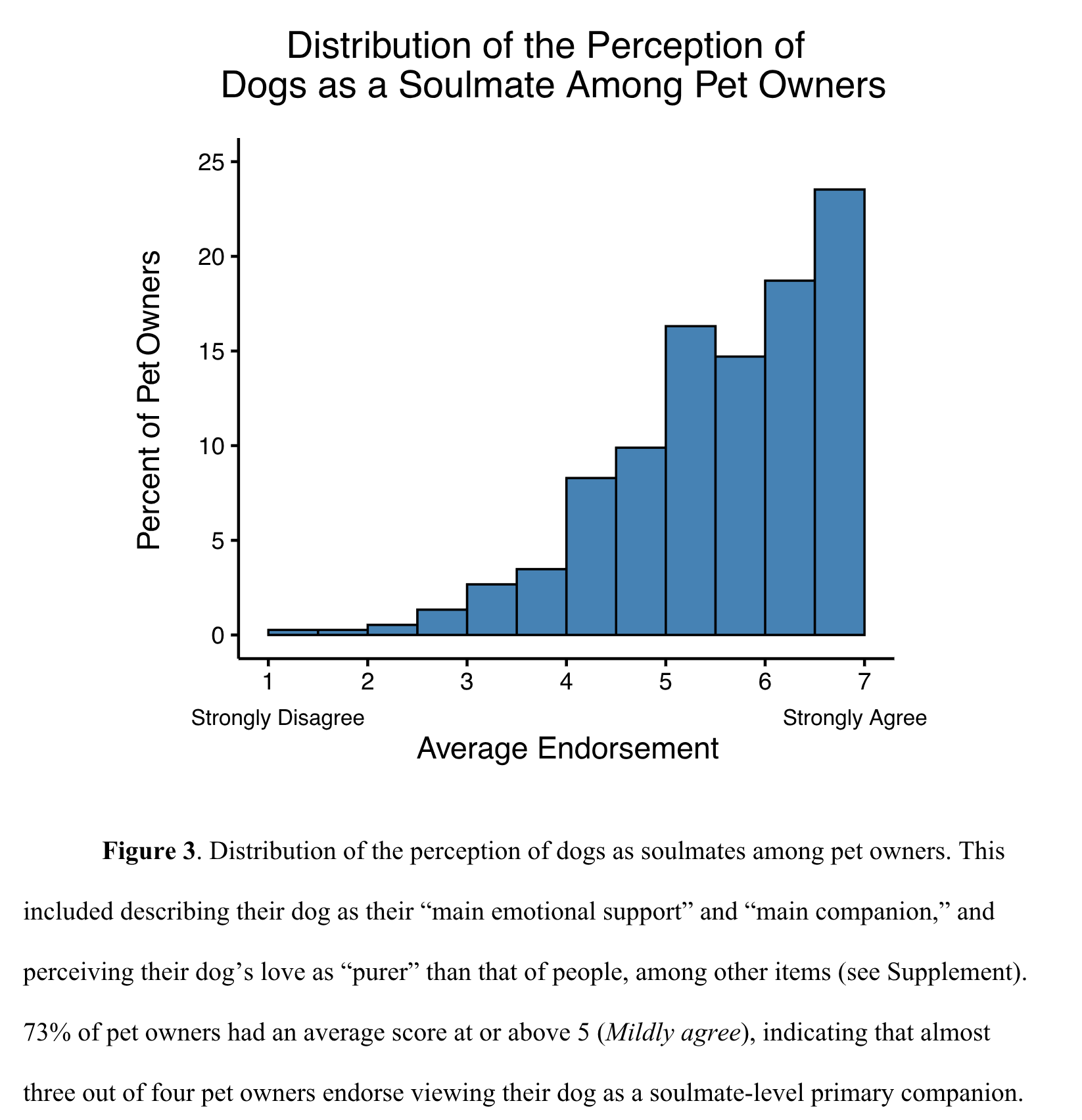
It would appear the average pet owning subject considers their dogs as kinda to very much their soulmates. I grew up with dogs, cats, pigs, chickens, even goats. Yes, we were sad when the dog died, or one of the favorite cats, but it certainly wasn’t a soulmate. But we were children, and not adults participating in this study.
Next up some moral hypotheticals about who to save:
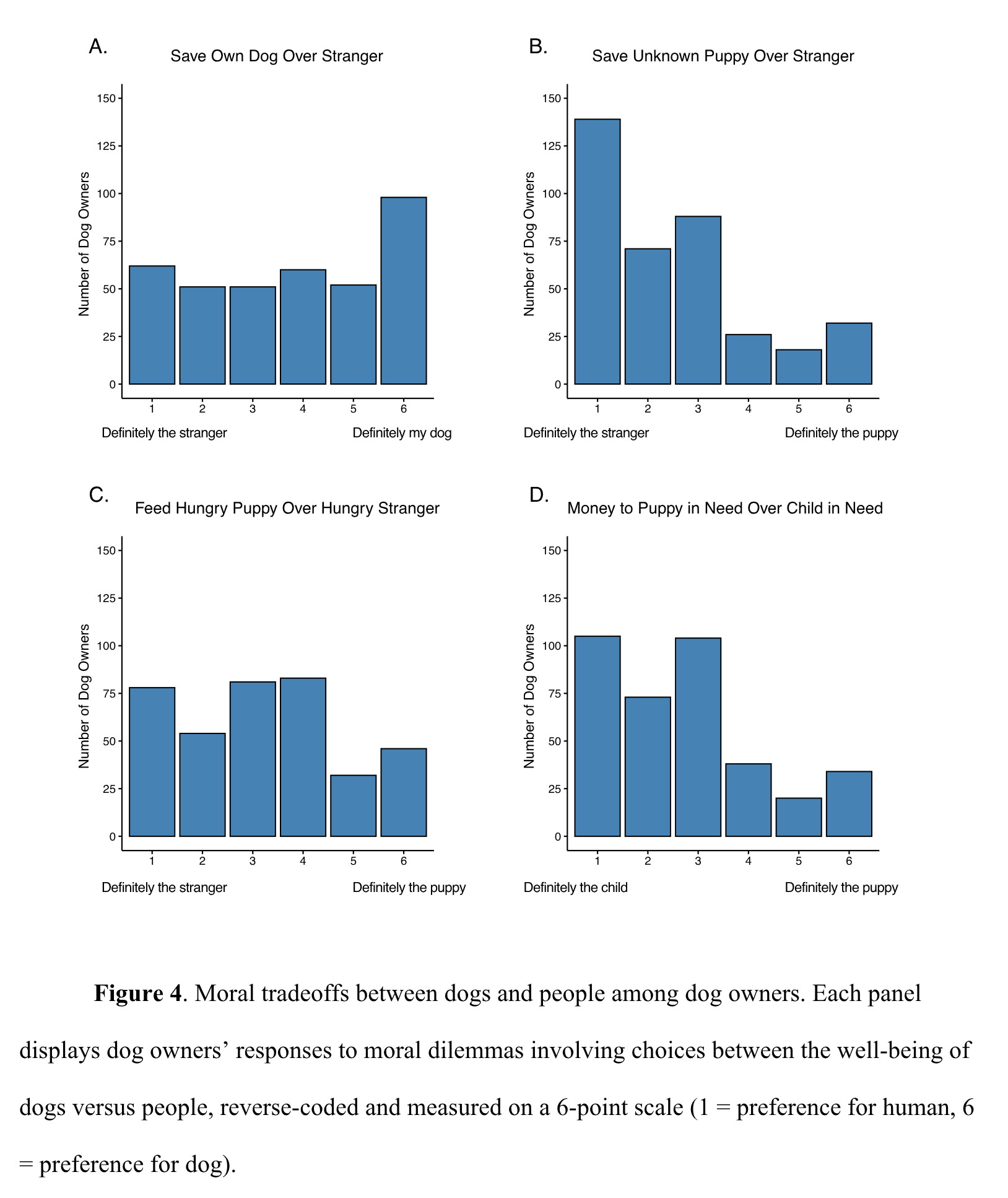
It seems there is a majority who would save their dog over a human stranger. I mean, looking at American cities, I tend to agree. Some would even save a stranger puppy over a human stranger, which is more dubious (but then again, American cities are filled with homeless on the street).
The working theory of the study is really the substitution model. People could have children, but that’s too much work so they substitute them for pets and project human qualities into them:
Given the inverse relationship between birth rates and pet spending found in Study 1, we next tested whether dog owners without children were more likely to coddle, prefer, and prioritize dogs over people than dog owners with children. Childfree dog owners showed significantly greater tendencies to coddle, prefer, and prioritize dogs across nearly all main measures—trends that were mediated by the extent to which they viewed their dogs as emotional soulmates. For example, fewer than half of dog owners with children chose to save their dog over a human stranger (44%), compared with 73% of childless dog owners. Additionally, dog owners without children were more likely to say that their dog “takes the place of a baby” for them, b= -1.54, β= -0.70, SE= 0.10, t(361) = -7.14, p< .001, 95% CI[-0.90, -0.51]. Taken together, these findings provide further evidence that for many owners, dogs may be taking on the role of children. See Supplementary Tables 1 and 2 for full results.
The study isn’t air-tight, but it’s plausible enough. Certainly, there is something to the catlady memes, so it should work for dogs too, even if dog-people are more pro-children in theory.
We spent the first 9 years of our marriage coddling a dog. I still miss that dog but we should have had more kids.
As for saving a dog or a person. I’m gonna need more information.
The Boss Baby is vindicated.